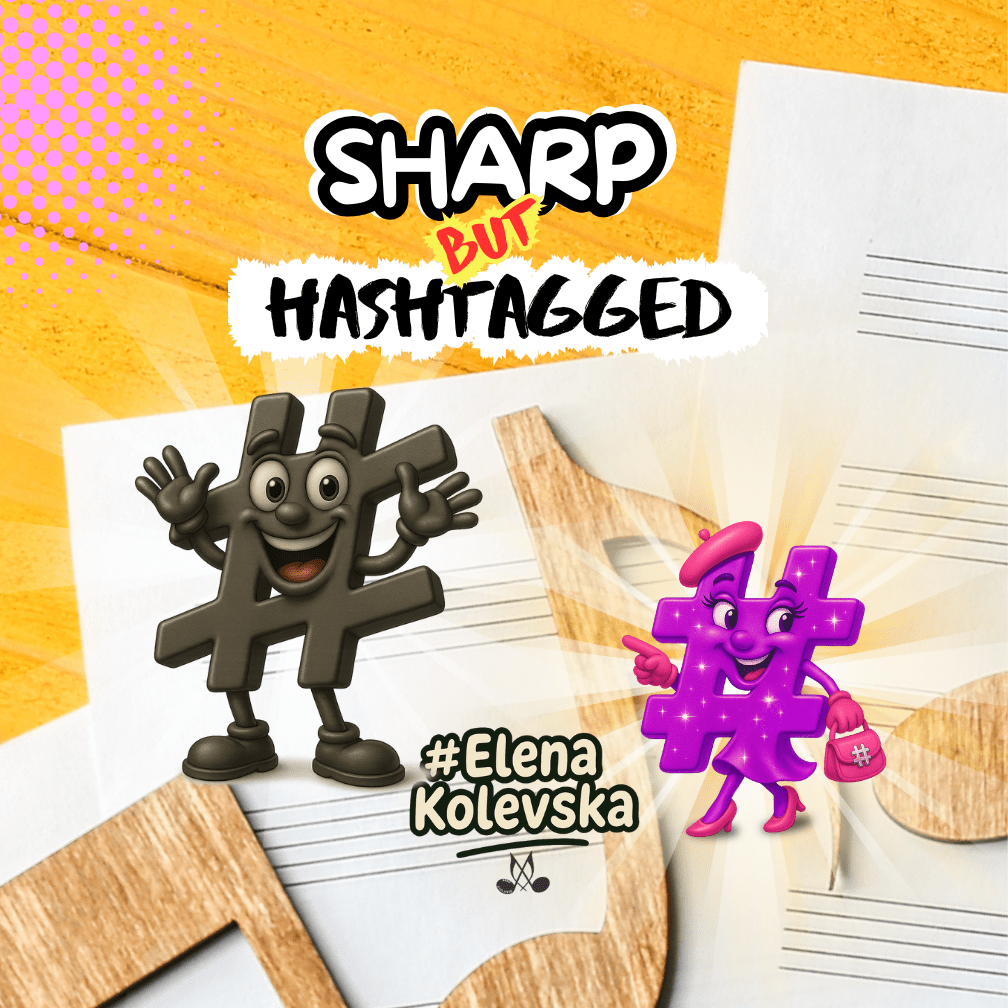
Sharp But Hashtagged is a playful, modern children’s music story that tackles one of the funniest classroom mix-ups: kids confusing the sharp sign (♯) with the hashtag (#). GET IT HERE
Told with humor, relatable language, and plenty of musical terms, this book helps students (and teachers!) finally clear up the confusion in a way that sticks. Through witty dialogue, creative illustrations, and interactive moments, kids will see how the sharp sign belongs in music and the hashtag rules the internet—two worlds colliding in one unforgettable tale.
It’s more than just a story—it’s a teaching tool teachers can actually use in class to make music notation fun, memorable, and downright hilarious.
Perfect for: 🎶 Elementary music classrooms 📚 Teachers looking for engaging read-alouds 😂 Kids who love a laugh and learn best through stories
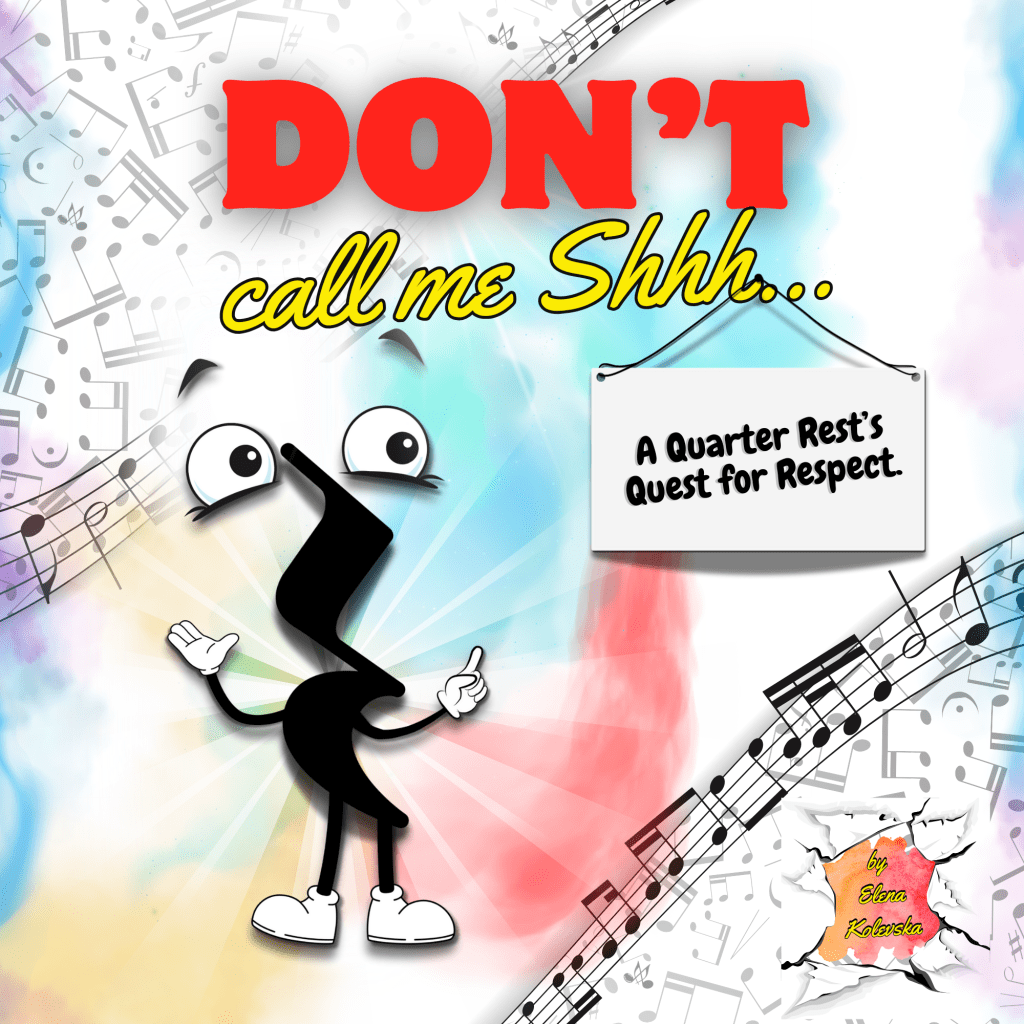
“Don’t Call Me Shh… A Quarter Rest’s Quest for Respect” is a fun and heartwarming children’s book that introduces young readers to the power of silence in music. Follow the Quarter Rest as it embarks on a journey to prove its importance when the musician always shushes it. Tired of being ignored and skipped, the Quarter Rest teaches everyone that even silence has a role in creating beautiful music. With charming illustrations and easy-to-understand explanations of musical terms, this story is perfect for young music lovers and those learning the basics of rhythm and rest.
Join the Quarter Rest on its mission to be seen and heard—because sometimes, silence is the key to perfect music!
In the book “The Kingdom of the Grand Staff” , two kings—one ruled over high melodies, the other of deep rhythms—competed to prove their music was best. A duet by young musicians united their sounds, inspiring the rulers to merge their realms into one harmonious kingdom named – The Kingdom of the Grand Staff.
The Great Metronome – The Tale of Beat, Bounce, and Tap.
As a music teacher, it is always important to find books for the little kids with accurate information. It seems like most of the music books are written by people without music education, or just not enough information. I wrote this book because little kids need to know the terminology we use as musicians and learn about those music terms in a fun way. I hope you enjoy it!
The Tale of Beat, Bounce, and Tap is a lively children’s book that invites young readers to explore the joyful world of music through rhythm and movement. In the vibrant town of Musicville, children discover how to create beats, tap their feet, and bounce along to the catchy melodies that fill the air. With engaging characters and interactive elements, the story encourages kids to join in the fun, fostering a love for music while promoting coordination and creativity. Perfect for music lovers of all ages, this book is a delightful journey that inspires kids to express themselves through rhythm and sound!
Frédéric Chopin, a renowned Polish composer and virtuoso pianist, created beautiful and enchanting music that can captivate audiences of all ages. Introducing children to Chopin’s music can be a delightful and enriching experience, offering them a chance to appreciate classical music from an early age.
One way to engage children with Chopin’s music is through his simpler and more melodic pieces, such as the “Nocturne in E-Flat Major, Op. 9, No. 2” or the “Prelude in A Major, Op. 28, No. 7.” These pieces possess a gentle and lyrical quality that can appeal to young listeners.
Additionally, there are many resources available for introducing children to Chopin, including educational videos that explore his life and music in a kid-friendly manner. Pairing these resources with interactive activities, such as listening games or musical storytelling, can further enhance a child’s understanding and appreciation of Chopin’s music.
For an immersive experience, parents and educators can utilize the link you provided (https://youtu.be/W-ScdtCUmc4) to access engaging and educational content tailored to kids.
By nurturing an early love for Chopin’s music, children can develop an enduring appreciation for classical music and its rich cultural heritage.
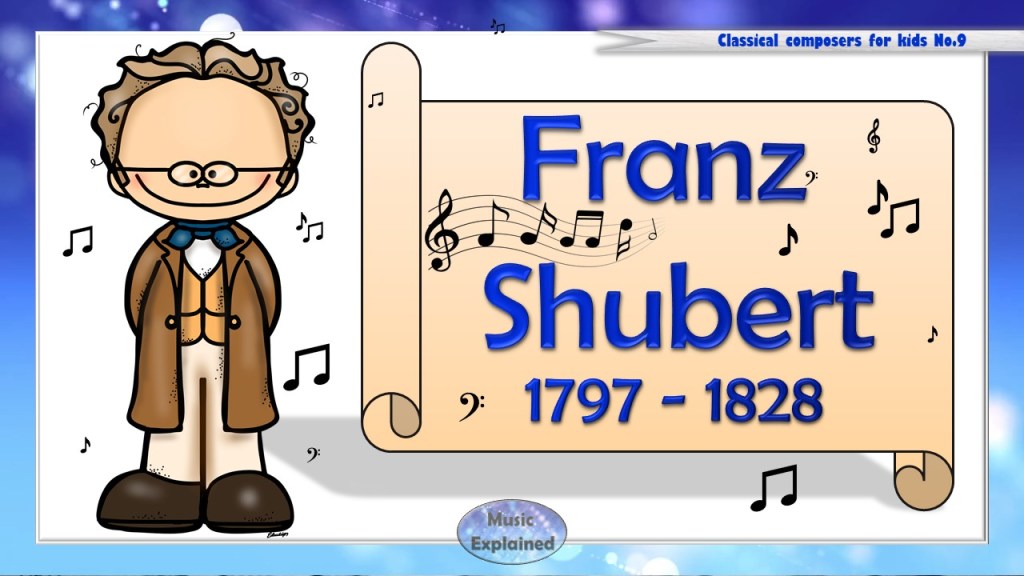
His father was a schoolmaster and played violin and cello.
Franz’s father taught him to play the violin, his older brother, Ignaz taught him piano.
Franz was such an eager student that his teachers had trouble keeping ahead of him. He seemed to already know what they were going to say.
When he was 11, Shubert’s wonderful voice earned him admission into the Imperial Choir where court singers were trained.
As a good student, he soon became the first violinist of the orchestra and was even allowed to conduct.
He studied avidly the works of Mozart and Beethoven
Shubert began composing under the direction of his teacher: Antonio Salieri.
Shubert was a very friendly, happy, and likable person. He had many friends. They gathered in the evenings to hear Shubert play his music and to enjoy hearing some of the best singers perform his songs.
Shubert liked people and they liked him. He had little money, but great wealth in his many friends. These friends, most of high social standing, were lawyers, businessmen, painters, government officials, and poets.
They looked after his needs, often giving him money, food, and a place to stay. In the evenings they would gather in a home to hear Shubert’s music.”
These evening parties became known as “Schubertiades”. Often the most famous singers of the day would come to sing his songs while he accompanied them. Everyone had a good time listening, laughing, playing games, and dancing. All the friends had nicknames; Shubert was called “Tubby” because he was short and rather round!
Shubert composed very quickly. Once when he was visiting his friend in the hospital, he wrote an entire composition in the three hours he was there. Another time while having dinner with his friends and having just heard one of them read a poem from Shakespeare, an idea for a melody came to him. Not having any music paper, he wrote the music on the back of the bill.
Besides having written over 600 songs, Shubert composed piano and choral music. He wrote 8 symphonies; the best known is the “Unfinished” Symphony. It is called the unfinished because it contains two movements rather than the usual four.
Shubert was deeply affected by the death of his idol, Beethoven in 1827 and was a torchbearer at his funeral.
Unfortunately, he died a few months later at the age of 31. He was buried close to Beethoven’s grave in the Waring cemetery.
Watch the video on my YouTube channel and enjoy the beautiful classical music!
Without music, each scene shown would be lacking something. Some of the scenes would not even exist.
These themes allow you to remember the moments when you first heard them in a movie, a television show, or a concert.
At times, music can even suggest visual images to you, connecting you further with the first time you experienced the music.
Think, for example, about some of your favorite movies. Can you imagine watching them without hearing the music of the soundtrack?
Hearing those themes probably causes you to remember how much you enjoyed the movies.
At times, music can even suggest visual images to you, connecting you further with the first time you experienced the music.
Think, for example, about some of your favorite movies. Can you imagine watching them without hearing the music of the soundtrack?
Hearing those themes probably causes you to remember how much you enjoyed the movies.
Without the soundtrack, it would be very difficult to portray the emotional ups and downs of a film, scare the audience in a horror scene, and help the audience relate much better to the emotions being portrayed on screen.
On the other hand, the rousing soundtrack can not only make a scene more interesting, but it also connects the audience to the characters and their situations.
History of Music in Film
There was once a time when movies didn’t include any audio, only music! Before talkies, or movies where audiences heard the characters’ spoken words, there were silent films. The audience followed the action on screen as it was accompanied by music and periodic subtitles that described the action.
Charlie Chaplin was one silent film actor whose name and work you may find familiar. In 1927, The Jazz Singer transformed the silent film industry by becoming the first movie to match actors’ moving lips to their voices. In 1935, the Academy of Motion Picture Arts and Sciences began awarding Oscars for music in film, and with good reason!
Types of Music in Film
According to the American Society of Composers, Authors, and Publishers (ASCAP), there are three types of music found in films:
Songs that already exist
2. Songs were written specifically for a certain film
3.Underscores
Existing songs can effectively set a film during a certain time period by using recognizable songs from a specific era.
Catchy, original songs can become as popular as the movie itself.
An underscore is music that plays in the background during a scene. You may not even notice it’s there, but next time you turn on your television, try to imagine a scene without the underscore and you’ll realize how important it is!
Camille Saint Saens was a French composer who wrote the famous The Carnival of the Animals. This is a kid-friendly video that you can watch in your classroom! Skip to music 4:40
When was the piano invented? Who invented the piano? What is inside my piano? How does the piano produce its sound? All these questions answered in 5 minutes and kid-friendly!!! Fur Elise Beethoven is one of the compositions played in the video.








 Music Explained